Engineering & entrance exams

Engineer & Medical previous year questions (PYQ)

109,045 previous year Engineer & Medical questions, grouped by year, with answers and solutions.

2026 (2936 questions)

Q1.

Let $P_1$, $P_2$, $P_3$ be the altitudes of a triangle ABC from the vertices A, B, C respectively. If $\triangle$ denotes the area of the triangle and s is the semi-perimeter of the triangle, then $\dfrac{\cos A}{P_1} + \dfrac{\cos B}{P_2} + \dfrac{\cos C}{P_3} =$

(A)
$R$
(B)
$\dfrac{1}{R}$
(C)
$R^2$
(D)
$\dfrac{1}{R^2}$
Show answer & solution
Verified Answer & Solution Locked
Sign in to your free student account to reveal verified answers and step-by-step solutions.
Sign in to view
Q2.

Water flows through a horizontal pipe at a speed 'V'. Internal diameter of the pipe is 'd'. If the water is emerging at a speed '$V_1$' then the diameter of the nozzle is

(A)
$\text{d}\sqrt{\dfrac{\text{V}}{\text{V}_1}}$
(B)
$\text{d}\sqrt{\dfrac{\text{V}_1}{\text{V}}}$
(C)
$\dfrac{\text{dV}}{\text{V}_1}$
(D)
$\dfrac{\text{dV}_1}{\text{V}}$
Show answer & solution
Verified Answer & Solution Locked
Sign in to your free student account to reveal verified answers and step-by-step solutions.
Sign in to view

2025 (4668 questions)

Q1.

${ }^{\text { } }$ If $\alpha=1+\sum_{r=1}^6(-3)^{r-1} \quad{ }^{12} \mathrm{C}_{2 r-1}$, then the distance of the point $(12, \sqrt{3})$ from the line $\alpha x-\sqrt{3} y+1=0$ is _________.

Show answer & solution
Verified Answer & Solution Locked
Sign in to your free student account to reveal verified answers and step-by-step solutions.
Sign in to view
Q2.

If the equation $\mathrm{a}(\mathrm{b}-\mathrm{c}) \mathrm{x}^2+\mathrm{b}(\mathrm{c}-\mathrm{a}) \mathrm{x}+\mathrm{c}(\mathrm{a}-\mathrm{b})=0$ has equal roots, where $\mathrm{a}+\mathrm{c}=15$ and $\mathrm{b}=\frac{36}{5}$, then $a^2+c^2$ is equal to

Show answer & solution
Verified Answer & Solution Locked
Sign in to your free student account to reveal verified answers and step-by-step solutions.
Sign in to view

2024 (5350 questions)

Q1.

For the reaction, $\mathrm{A}+3 \mathrm{~B} \longrightarrow 2 \mathrm{C}$ rate of consumption of A is $1.4 \mathrm{~mol} \mathrm{dm}^{-3} \mathrm{sec}^{-1}$. Calculate rate of formation of C ?

(A)
$0.07 \mathrm{moldm}^{-3} \mathrm{sec}^{-1}$
(B)
$1.4 \mathrm{moldm}^{-3} \mathrm{sec}^{-1}$
(C)
$2.8 \mathrm{moldm}^{-3} \mathrm{sec}^{-1}$
(D)
$3.5 \mathrm{~mol} \mathrm{dm}^{-3} \mathrm{sec}^{-1}$
Show answer & solution
Verified Answer & Solution Locked
Sign in to your free student account to reveal verified answers and step-by-step solutions.
Sign in to view
Q2.

lectronic configuration of \(\mathrm{Cu}(\mathrm{II})\) is \(3 \mathrm{~d}^9\) whereas that of \(\mathrm{Cu}(\mathrm{I})\) is \(3 \mathrm{~d}^{10}\). Which of the following is correct?

(A)
Stability of \(\mathrm{Cu}(\mathrm{I})\) and \(\mathrm{Cu}(\mathrm{II})\) depends on nature of copper salts
(B)
\(\mathrm{Cu}(\mathrm{II})\) is more stable
(C)
\(\mathrm{Cu}(\mathrm{I})\) and \(\mathrm{Cu}(\mathrm{II})\) are equally stable
(D)
\(\mathrm{Cu}\) (II) is less stable
Show answer & solution
Verified Answer & Solution Locked
Sign in to your free student account to reveal verified answers and step-by-step solutions.
Sign in to view

2023 (4787 questions)

Q1.

An electron of charge ' $\mathrm{e}$ ' is moving round the nucleus of a hydrogen atom in a circular orbit of radius ' $r$ '. The coulomb force $\overrightarrow{\mathrm{F}}$ between the two is $\left(\right.$ here $\left.\mathrm{K}=\frac{1}{4 \pi \varepsilon_0}\right)$

(A)
$-\mathrm{K} \frac{\mathrm{e}^2}{\mathrm{r}^3} \hat{\mathrm{r}}$
(B)
$\mathrm{K} \frac{\mathrm{e}^2}{\mathrm{r}^3} \overrightarrow{\mathrm{r}}$
(C)
$-\mathrm{K} \frac{\mathrm{e}^2}{\mathrm{r}^3} \overrightarrow{\mathrm{r}}$
(D)
$\mathrm{K} \frac{\mathrm{e}^2}{\mathrm{r}^2} \overrightarrow{\mathrm{r}}$
Show answer & solution
Verified Answer & Solution Locked
Sign in to your free student account to reveal verified answers and step-by-step solutions.
Sign in to view
Q2.

In $\triangle A B C$, if $(a-b)(s-c)=(b-c)(s-a)$, then $r_1, r_2, r_3$ are in

(A)
Arithmetic progression
(B)
Geometric progression
(C)
Harmonic progression
(D)
Arithmetico - geometric progression
Show answer & solution
Verified Answer & Solution Locked
Sign in to your free student account to reveal verified answers and step-by-step solutions.
Sign in to view

2022 (4714 questions)

Q1.

A student needs to prepare a buffer solution of propanoic acid and its sodium salt with pH4. The ratio of CH3CH2COO-CH3CH2COOH required to make buffer is Given : KaCH3CH2COOH=1.3×10⁻⁵

(A)
0.03
(B)
0.13
(C)
0.23
(D)
0.33
Show answer & solution
Verified Answer & Solution Locked
Sign in to your free student account to reveal verified answers and step-by-step solutions.
Sign in to view
Q2.

In a series LR circuit XL=R and power factor of the circuit is P1. When capacitor with capacitance C such that XL=XC is put in series, the power factor becomes P2. The ratio P1P2 is

(A)
12
(B)
12
(C)
32
(D)
2:1
Show answer & solution
Verified Answer & Solution Locked
Sign in to your free student account to reveal verified answers and step-by-step solutions.
Sign in to view

2021 (5073 questions)

Q1.

The mole fraction of a solute in one molal ethanolic solution would be

(A)
0.21
(B)
0.52
(C)
0.044
(D)
0.75
Show answer & solution
Verified Answer & Solution Locked
Sign in to your free student account to reveal verified answers and step-by-step solutions.
Sign in to view
Q2.

If 4 times the area of a ∆ABC is c2-(a-b)2, then sinC

(A)
32
(B)
12
(C)
12
(D)
1
Show answer & solution
Verified Answer & Solution Locked
Sign in to your free student account to reveal verified answers and step-by-step solutions.
Sign in to view

2020 (4869 questions)

Q1.

The value of \(\left(\sin 210^{\circ}\right)\left(\sin 585^{\circ}\right)\) is

(A)
\(\frac{1}{2 \sqrt{2}}\)
(B)
\(\frac{-1}{2 \sqrt{2}}\)
(C)
\(\frac{1}{\sqrt{3}}\)
(D)
\(\frac{-1}{\sqrt{3}}\)
Show answer & solution
Verified Answer & Solution Locked
Sign in to your free student account to reveal verified answers and step-by-step solutions.
Sign in to view
Q2.

Which of the following chemical intermediates are the products of light reaction in photosynthesis?

(A)
$\mathrm{CO}_2$ and NADPH
(B)
ATP and NADPH
(C)
$\mathrm{CO}_2$ and ATP
(D)
$\mathrm{H}_2 \mathrm{O}$ and NADPH
Show answer & solution
Verified Answer & Solution Locked
Sign in to your free student account to reveal verified answers and step-by-step solutions.
Sign in to view

2019 (3062 questions)

Q1.

The temporary hardness of water is due to:

(A)
Na2SO4
(B)
NaCl
(C)
CaCl2
(D)
CaHCO32
Show answer & solution
Verified Answer & Solution Locked
Sign in to your free student account to reveal verified answers and step-by-step solutions.
Sign in to view
Q2.

Which of the following oxides can act both as oxidising agent as well as reducing agent?

(A)
N2O
(B)
SO2
(C)
SO3
(D)
P2O5
Show answer & solution
Verified Answer & Solution Locked
Sign in to your free student account to reveal verified answers and step-by-step solutions.
Sign in to view

2018 (2251 questions)

Q1.

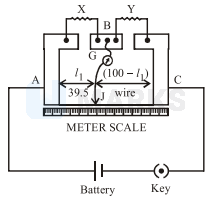
In a meter bridge, as shown in the figure, it is given that resistance $Y=12.5 \Omega$ and that the balance is obtained at a distance $39.5 \mathrm{~cm}$ from end $A$ (by jockey J). After interchanging the resistances $X$ and $Y$, a new balance point is found at a distance $l_2$ from end $A$. What are the values of $X$ and $l_2$ ?

(A)
$19.15 \Omega$ and $39.5 \mathrm{~cm}$
(B)
$8.16 \Omega$ and $60.5 \mathrm{~cm}$
(C)
$19.15 \Omega$ and $60.5 \mathrm{~cm}$
(D)
$8.16 \Omega$ and $39.5 \mathrm{~cm}$
Show answer & solution
Verified Answer & Solution Locked
Sign in to your free student account to reveal verified answers and step-by-step solutions.
Sign in to view
Q2.

In a $\triangle A B C$, if $a=5, b=6, c=7$, then the length of the median drawn from $B$ is

(A)
$2 \sqrt{7}$
(B)
$2 \sqrt{6}$
(C)
$\sqrt{7}$
(D)
$\sqrt{6}$
Show answer & solution
Verified Answer & Solution Locked
Sign in to your free student account to reveal verified answers and step-by-step solutions.
Sign in to view

2017 (1422 questions)

Q1.

The locus of the point $P$ such that the area of the $\triangle \mathrm{PAB}$ is 7 , where $\mathrm{A}(4,5)$ and $\mathrm{B}(-2,3)$ are given points, is

(A)
a straight line
(B)
a pair of parallel lines
(C)
a circle
(D)
an ellipse
Show answer & solution
Verified Answer & Solution Locked
Sign in to your free student account to reveal verified answers and step-by-step solutions.
Sign in to view
Q2.

Purification of NaCl by passage of hydrogen chloride through brine is based on

(A)
Common ion effect
(B)
Distribution coeffficient
(C)
Le-Chatelier's principle
(D)
Distribution law
Show answer & solution
Verified Answer & Solution Locked
Sign in to your free student account to reveal verified answers and step-by-step solutions.
Sign in to view

2016 (808 questions)

Q1.

A ray of light is incident along a line which meets another line 7x-y+1=0 at the point 0,1. The ray is then reflected from this point along the line y+2x=1. Then the equation of the line of incidence of the ray of light is :

(A)
41x-25y+25=0
(B)
41x+25y-25=0
(C)
41x-38y+38=0
(D)
41x+38y-38=0
Show answer & solution
Verified Answer & Solution Locked
Sign in to your free student account to reveal verified answers and step-by-step solutions.
Sign in to view
Q2.

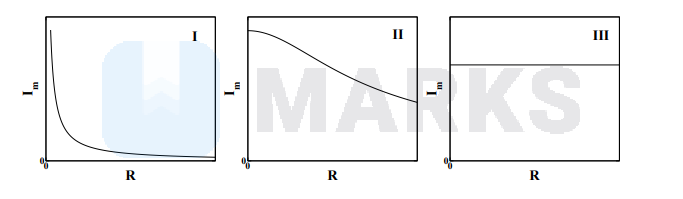
A series LCR circuit is built with a variable resistor. The resonant frequency of the circuit is $\omega_0$. The circuit response ( $I_m-R$ profile, where, $I_m$ is peak current and $R$ is resistance) is recorded for three different values of frequencies $(\omega)$ of input signal, and these are depicted schematically in the accompanying figures, I, II and III. The figures respectively correspond to

(A)
$\omega=\omega_0, \omega \approx \omega_0$ and $\omega \gg \omega_0$
(B)
$\omega \approx \omega_0, \omega=\omega_0$ and $\omega \gg \omega_0$.
(C)
$\omega \approx \omega_0, \omega=\omega_0$ and $\omega \ll \omega_0$
(D)
$\omega=\omega_0, \omega \ll \omega_0$ and $\omega \gg \omega_0$
Show answer & solution
Verified Answer & Solution Locked
Sign in to your free student account to reveal verified answers and step-by-step solutions.
Sign in to view

2015 (714 questions)

Q1.

If ∑ n=1 5 1nn+1n+2n+3=k3,  then k is equal to:

(A)
55336
(B)
17105
(C)
19112
(D)
16
Show answer & solution
Verified Answer & Solution Locked
Sign in to your free student account to reveal verified answers and step-by-step solutions.
Sign in to view
Q2.

We have a galvanometer of resistance $25 \Omega$. It is shunted by $2.5 \Omega$ wire. The part of the total current that flows through the galvanometer is given as

(A)
$\frac{i}{i_0}=\frac{4}{11}$
(B)
$\frac{i}{i_0}=\frac{3}{11}$
(C)
$\frac{i}{i_0}=\frac{2}{10}$
(D)
$\frac{i}{i_0}=\frac{1}{11}$
Show answer & solution
Verified Answer & Solution Locked
Sign in to your free student account to reveal verified answers and step-by-step solutions.
Sign in to view

2014 (1019 questions)

Q1.

The correct statement about the magnetic properties of [Fe(CN)6]3- and [FeF6]3- is : (Z = 26).


[FeF6]3- is paramagnetic.

(A)
Both are paramagnetic.
(B)
Both are diamagnetic.
(C)
[Fe(CN)6]3-  is paramagnetic,

 [FeF6]3- is diamagnetic.
(D)
[Fe(CN)6]3-  is diamagnetic,
Show answer & solution
Verified Answer & Solution Locked
Sign in to your free student account to reveal verified answers and step-by-step solutions.
Sign in to view
Q2.

In allene $\left(\mathrm{C}_3 \mathrm{H}_4\right)$, the type(s) of hybridization of the carbon atoms is (are) :

(A)
$\mathrm{sp}$ and $\mathrm{sp}^3$
(B)
$\mathrm{sp}^2$ and $\mathrm{sp}$
(C)
only $\mathrm{sp}^2$
(D)
$\mathrm{sp}^2$ and $\mathrm{sp}^3$
Show answer & solution
Verified Answer & Solution Locked
Sign in to your free student account to reveal verified answers and step-by-step solutions.
Sign in to view

2013 (1009 questions)

Q1.

Given sum of the first $n$ terms of an A.P. is $2 n+$ $3 n^2$. Another A.P. is formed with the same first term and double of the common difference, the sum of $n$ terms of the new A.P. is :

(A)
$n+4 n^2$
(B)
$6 n^2-n$
(C)
$n^2+4 n$
(D)
$3 n+2 n^2$
Show answer & solution
Verified Answer & Solution Locked
Sign in to your free student account to reveal verified answers and step-by-step solutions.
Sign in to view
Q2.

Which of the following statements/relationships is not correct in thermodynamic changes ?

(A)
$\Delta \mathrm{U}=0$ (isothermal reversible expansion of a gas)
(B)
$\mathrm{w}=-\mathrm{nRT} \ln \frac{\mathrm{V}_2}{\mathrm{~V}_1}$ (isothermal reversible expansion of an ideal gas)
(C)
$\mathrm{w}=\mathrm{nRT} \ln \frac{\mathrm{V}_2}{\mathrm{~V}_1}$ (isothermal reversible expansion of an ideal gas)
(D)
For a system of constant volume heat involved directly changes to internal energy.
Show answer & solution
Verified Answer & Solution Locked
Sign in to your free student account to reveal verified answers and step-by-step solutions.
Sign in to view

2012 (1069 questions)

Q1.

At a certain place a magnet makes 30 oscillations per minute. At another place where the magnetic field is double, its time period will be

(A)
$4 \mathrm{~s}$
(B)
$2 \mathrm{~s}$
(C)
$\frac{1}{2} \mathrm{~s}$
(D)
$\sqrt{2} \mathrm{~s}$
Show answer & solution
Verified Answer & Solution Locked
Sign in to your free student account to reveal verified answers and step-by-step solutions.
Sign in to view
Q2.

The probability distribution for the speed $(v)$ of molecules for an ideal gas at temperature $T$, is given by
$f(v)=4 \pi v^2\left(\frac{m}{2 \pi k_B T}\right)^{3 / 2} \exp \left(-\frac{m v^2}{2 k_B T}\right)$
where $m$ is the mass of a molecule and $k_{\mathrm{B}}$ is the Boltzmann constant. Among the following, the correct statement is

(A)
The most probable velocity is proportional to $T^{3 / 2}$.
(B)
For two different gases $A$ and $B$, the average velocity of the molecules of $A$ is same as that of B , at a given temperature.
(C)
For two different gases A and B, the average kinetic energy of the molecules of $A$ is same as that of $B$, at a given temperature.
(D)
The most probable velocity is higher than the average velocity.
Show answer & solution
Verified Answer & Solution Locked
Sign in to your free student account to reveal verified answers and step-by-step solutions.
Sign in to view

2011 (832 questions)

Q1.

Under which one of the following conditions do real gases approach the ideal gas behaviour?

(A)
Low temperature and high pressure
(B)
High temperature and high pressure
(C)
High temperature and low pressure
(D)
Low temperature and low pressure
Show answer & solution
Verified Answer & Solution Locked
Sign in to your free student account to reveal verified answers and step-by-step solutions.
Sign in to view
Q2.

In plants when one sperm fertilizes the egg and the other fertilizes the polar bodies, the process is referred to as double fertilization. This results in the formation of

(A)
diploid zygote and diploid endosperm.
(B)
diploid zygote and triploid endosperm.
(C)
diploid zygote and tetraploid endosperm.
(D)
tetraploid zygote and tetraploid endosperm.
Show answer & solution
Verified Answer & Solution Locked
Sign in to your free student account to reveal verified answers and step-by-step solutions.
Sign in to view

2010 (838 questions)

Q1.

Water from a tap emerges vertically downwards with initial velocity $4 \mathrm{~ms}^{-1}$. The cross-sectional area of the tap is $A$. The flow is steady and pressure is constant throughout the stream of water. The distance $h$ vertically below the tap, where the cross-sectional area of the stream becomes $\left(\frac{2}{3}\right) A$, is $\left(g=10 \mathrm{~m} / \mathrm{s}^2\right)$

(A)
$0.5 \mathrm{~m}$
(B)
$1 \mathrm{~m}$
(C)
$1.5 \mathrm{~m}$
(D)
$2.2 \mathrm{~m}$
Show answer & solution
Verified Answer & Solution Locked
Sign in to your free student account to reveal verified answers and step-by-step solutions.
Sign in to view
Q2.

Which of the following pairs of $2,3$-butanediol are enantiomeric?

(A)
$2R, 3R$ and $2S, 3S$
(B)
$2S, 3S$ and $2S, 3R$
(C)
$2R, 3R$ and $2R, 3S$
(D)
$2S, 3S$ and $2R, 3S$
Show answer & solution
Verified Answer & Solution Locked
Sign in to your free student account to reveal verified answers and step-by-step solutions.
Sign in to view

2009 (638 questions)

Q1.

If $3 \cos x \neq 2 \sin x$, then the general solution of $\sin ^2 x-\cos 2 x=2-\sin 2 x$ is

(A)
$n \pi+(-1)^n \frac{\pi}{2}, n \in Z$
(B)
$\frac{n \pi}{2}, n \in Z$
(C)
$(4 n \pm 1) \frac{\pi}{2}, n \in Z$
(D)
$(2 n-1) \pi, n \in Z$
Show answer & solution
Verified Answer & Solution Locked
Sign in to your free student account to reveal verified answers and step-by-step solutions.
Sign in to view
Q2.

In any $\triangle A B C, a(b \cos C-c \cos B)$ equals

(A)
$b^2+c^2$
(B)
$b^2-c^2$
(C)
$\frac{1}{b}+\frac{1}{c}$
(D)
$\frac{1}{b^2}-\frac{1}{c^2}$
Show answer & solution
Verified Answer & Solution Locked
Sign in to your free student account to reveal verified answers and step-by-step solutions.
Sign in to view

2008 (673 questions)

Q1.

If $\alpha+\beta+\gamma=2 \theta$, then $\cos \theta+\cos (\theta-\alpha)$ $+\cos (\theta-\beta)+\cos (\theta-\gamma)$ is equal to

(A)
$4 \sin \frac{\alpha}{2} \cdot \cos \frac{\beta}{2} \cdot \sin \frac{\gamma}{2}$
(B)
$4 \cos \frac{\alpha}{2} \cdot \cos \frac{\beta}{2} \cdot \cos \frac{\gamma}{2}$
(C)
$4 \sin \frac{\alpha}{2} \cdot \sin \frac{\beta}{2} \cdot \sin \frac{\gamma}{2}$
(D)
$4 \sin \alpha \cdot \sin \beta \cdot \sin \gamma$
Show answer & solution
Verified Answer & Solution Locked
Sign in to your free student account to reveal verified answers and step-by-step solutions.
Sign in to view
Q2.

One junction of a certain thermoelectric couple is at a fixed temperature $T_r$ and the other junction is at temperature $T$. The thermo-electromotive force for this is expressed by $E=k\left(T-T_r\right)\left[T_0-\frac{1}{2}\left(T+T_r\right)\right]$. At temperature $T=\frac{1}{2} T_0$, the thermoelectric power is

(A)
$\frac{1}{2} k T_0$
(B)
$k T_0$
(C)
$\frac{1}{2} k T_0^2$
(D)
$\frac{1}{2} k\left(T_0-T_r\right)^2$
Show answer & solution
Verified Answer & Solution Locked
Sign in to your free student account to reveal verified answers and step-by-step solutions.
Sign in to view

2007 (693 questions)

Q1.

Extraction for zinc from zinc blende is achieved by

(A)
electrolytic reduction
(B)
roasting followed by reduction with carbon
(C)
roasting followed by reduction with another metal
(D)
roasting followed by self-reduction
Show answer & solution
Verified Answer & Solution Locked
Sign in to your free student account to reveal verified answers and step-by-step solutions.
Sign in to view
Q2.

A man walks a distance of 3 units from the origin towards the North-East $\left(\mathrm{N} 45^{\circ} \mathrm{E}\right)$ direction. From there, he walks a distance of 4 units towards the North-West ( $\mathrm{N} 45^{\circ} \mathrm{W}$ ) direction to reach a point $P$. Then, the position of $P$ in the Argand plane is

(A)
$3 e^{i \pi / 4}+4 i$
(B)
$(3-4 i) e^{i \pi / 4}$
(C)
$(4+3 i) e^{i \pi / 4}$
(D)
$(3+4 i) e^{i \pi / 4}$
Show answer & solution
Verified Answer & Solution Locked
Sign in to your free student account to reveal verified answers and step-by-step solutions.
Sign in to view

2006 (587 questions)

Q1.

Which of the products is formed when acetone is reacted with barium hydroxide solution?

(A)
$CH_3-CO-CH_2-C(OH)(CH_3)_2$
(B)
$CH_3-CO-CH(CH_3)-CH(OH)-CH_3$
(C)
$CH_3-CO-CH(OH)-CH(CH_3)-CH_3$
(D)
$CH_3-C(OH)(CH_3)-C(OH)(CH_3)_2$
Show answer & solution
Verified Answer & Solution Locked
Sign in to your free student account to reveal verified answers and step-by-step solutions.
Sign in to view
Q2.

A mass of $\mathrm{M} \mathrm{kg}$ is suspended by a weightless string. The horizontal force that is required to displace it until the string makes an angle of $45^{\circ}$ with the initial vertical direction is

(A)
$M g(\sqrt{2}-1)$
(B)
$M g(\sqrt{2}+1)$
(C)
$M g \sqrt{2}$
(D)
$\frac{\mathrm{Mg}}{\sqrt{2}}$
Show answer & solution
Verified Answer & Solution Locked
Sign in to your free student account to reveal verified answers and step-by-step solutions.
Sign in to view

2005 (564 questions)

Q1.

A tower, of $x$ metres high, has a flagstaff at its top. The tower and the flagstaff subtend equal angles at a point distant $y$ metres from the foot of the tower. Then, the length of the flagstaff (in metres), is

(A)
$\frac{y\left(x^2-y^2\right)}{\left(x^2+y^2\right)}$
(B)
$\frac{x\left(y^2+x^2\right)}{\left(y^2-x^2\right)}$
(C)
$\frac{x\left(x^2+y^2\right)}{\left(x^2-y^2\right)}$
(D)
$\frac{x\left(x^2-y^2\right)}{\left(x^2+y^2\right)}$
Show answer & solution
Verified Answer & Solution Locked
Sign in to your free student account to reveal verified answers and step-by-step solutions.
Sign in to view
Q2.

Heating mixture of $\mathrm{Cu}_2 \mathrm{O}$ and $\mathrm{Cu}_2 \mathrm{~S}$ will give

(A)
$\mathrm{Cu}+\mathrm{SO}_2$
(B)
$\mathrm{Cu}+\mathrm{SO}_3$
(C)
$\mathrm{CuO}+\mathrm{CuS}$
(D)
$\mathrm{Cu}_2 \mathrm{SO}_3$
Show answer & solution
Verified Answer & Solution Locked
Sign in to your free student account to reveal verified answers and step-by-step solutions.
Sign in to view

2004 (562 questions)

Q1.

$A$ metallic ring of radius $r$ and cross-sectional area $A$ is fitted into a wooden circular disc of radius $R$ $(R \gt r)$. If the Young's modulus of the material of the ring is $Y$,the force with which the metal ring expands is

(A)
$\frac{A Y R}{r}$
(B)
$\frac{A Y(R-r)}{r}$
(C)
$\frac{Y(R-r)}{A r}$
(D)
$\frac{Y R}{A R}$
Show answer & solution
Verified Answer & Solution Locked
Sign in to your free student account to reveal verified answers and step-by-step solutions.
Sign in to view
Q2.

The magnetic induction and the intensity of the magnetic field inside an iron core of an electromagnet are $1 \ Wb \ m^{-2}$ and $150 \ A \ m^{-1}$,respectively. The relative permeability of iron is $\left(\mu_0 = 4 \pi \times 10^{-7} \ H \ m^{-1}\right)$.

(A)
$\frac{10^6}{4 \pi}$
(B)
$\frac{10^6}{6 \pi}$
(C)
$\frac{10^5}{4 \pi}$
(D)
$\frac{10^5}{6 \pi}$
Show answer & solution
Verified Answer & Solution Locked
Sign in to your free student account to reveal verified answers and step-by-step solutions.
Sign in to view

2003 (599 questions)

Q1.

$A$ tower subtends angles $\alpha, 2 \alpha$ and $3 \alpha$ respectively at points $A, B$ and $C$,all lying on a horizontal line through the foot of the tower. Then $\frac{A B}{B C}$ is equal to:

(A)
$\frac{\sin 3 \alpha}{\sin 2 \alpha}$
(B)
$1+2 \cos 2 \alpha$
(C)
$2 \cos 2 \alpha$
(D)
$\frac{\sin 2 \alpha}{\sin \alpha}$
Show answer & solution
Verified Answer & Solution Locked
Sign in to your free student account to reveal verified answers and step-by-step solutions.
Sign in to view
Q2.

$A$ ray of light is incident on the hypotenuse of a right-angled prism after travelling parallel to the base inside the prism. If $\mu$ is the refractive index of the material of the prism,the maximum value of the base angle for which light is totally reflected from the hypotenuse is

(A)
$\sin^{-1}\left(\frac{1}{\mu}\right)$
(B)
$\tan^{-1}\left(\frac{1}{\mu}\right)$
(C)
$\sin^{-1}\left(\frac{\mu-1}{\mu}\right)$
(D)
$\cos^{-1}\left(\frac{1}{\mu}\right)$
Show answer & solution
Verified Answer & Solution Locked
Sign in to your free student account to reveal verified answers and step-by-step solutions.
Sign in to view

2002 (668 questions)

Q1.

A body is projected up with a velocity equal to $\frac{3}{4}$ th of the escape velocity from the surface of the earth. The height it reaches is (Radius of the earth $=R$ )

(A)
$\frac{10 R}{9}$
(B)
$\frac{9 R}{7}$
(C)
$\frac{9 R}{8}$
(D)
$\frac{10 R}{3}$
Show answer & solution
Verified Answer & Solution Locked
Sign in to your free student account to reveal verified answers and step-by-step solutions.
Sign in to view
Q2.

A wave $y=a \sin (\omega t-k x)$ on a string meets with another wave producing a node at $x=0$. Then the equation of the unknown wave is

(A)
$y=a \sin (\omega t+k x)$
(B)
$y=-a \sin (\omega t+k x)$
(C)
$\mathrm{y}=\mathrm{a} \sin (\omega \mathrm{t}-\mathrm{kx})$
(D)
$\mathrm{y}=-\mathrm{a} \sin (\omega \mathrm{t}-\mathrm{kx})$
Show answer & solution
Verified Answer & Solution Locked
Sign in to your free student account to reveal verified answers and step-by-step solutions.
Sign in to view

2001 (488 questions)

Q1.

If $\operatorname{cosec} \theta=\frac{p+q}{p-q}$, then $\cot \left(\frac{\pi}{4}+\frac{\theta}{4}\right)$ is equal to

(A)
$\frac{\sqrt{p}}{q}$
(B)
$\frac{\sqrt{q}}{p}$
(C)
$\sqrt{p q}$
(D)
$p q$
Show answer & solution
Verified Answer & Solution Locked
Sign in to your free student account to reveal verified answers and step-by-step solutions.
Sign in to view
Q2.

The coefficient of $x^4$ in the expansion of $\frac{(1-3 x)^2}{(1-2 x)}$ is equal to

(A)
$1$
(B)
$2$
(C)
$3$
(D)
$4$
Show answer & solution
Verified Answer & Solution Locked
Sign in to your free student account to reveal verified answers and step-by-step solutions.
Sign in to view

2000 (58152 questions)

Q1.

In the special mode of reproduction observed in lemons, the embryos develop directly from the

(A)
nucellus
(B)
zygote
(C)
synergids or antipodals in an embryo sac
(D)
accessory embryo sacs in the ovule.
Show answer & solution
Verified Answer & Solution Locked
Sign in to your free student account to reveal verified answers and step-by-step solutions.
Sign in to view
Q2.

When a diploid female plant is crossed with a tetraploid male, the ploidy of endosperm cells in the resulting seed is

(A)
Tetraploidy
(B)
Pentaploidy
(C)
Diploidy
(D)
Triploidy
Show answer & solution
Verified Answer & Solution Locked
Sign in to your free student account to reveal verified answers and step-by-step solutions.
Sign in to view
All Years Protected

Want All 109045 Engineer & Medical PYQs?

Sign up free to unlock every previous year question paper with detailed solutions, practice in timed exam mode, and evaluate your rank.

Ready to practice Engineer & Medical PYQs?

Sign up free to unlock every previous year question and generate papers from them.